The Forty-Two-Day Ship
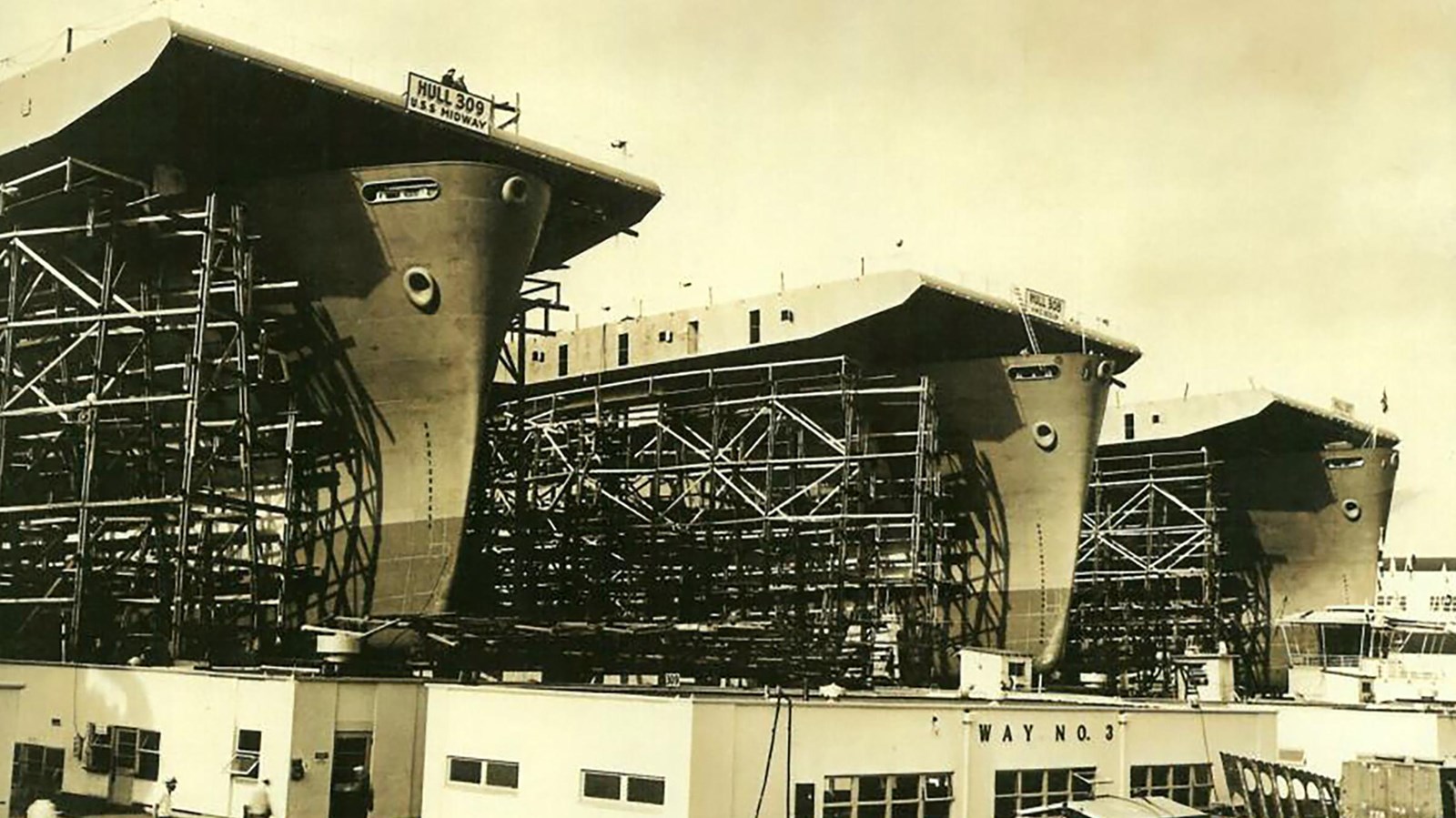
On November 8, 1942, at one minute past midnight, workers at Permanente Metals Yard No. 2 in Richmond, California laid the keel of a Liberty ship. They launched her four days, fifteen hours, and twenty-nine minutes later. The SS Robert E. Peary was a publicity stunt, but was illustrative of a ship-building transformation that literally changed the tide of World War II. When the Liberty program began, a cargo ship took about 230 days to build. By 1943, the average across all eighteen shipyards dropped to 42 days, and the labor hours per hull had roughly halved.
Henry Kaiser did not get there by hiring more shipwrights; there were simply none to hire. Rather, he changed the shipbuilding methods his workers used: welded instead of riveted, prefabricated in sections, assembled by people who had been farmers and clerks months earlier. The lesson of the 2,710 Liberty ships is that when the workforce you need does not exist, you must redesign the work to fit the workforce you have.
That lesson matters again, for civil fleets and bluewater navies alike. Here is the world it applies to.
Global Shipbuilding
The world delivered 71.7 million gross tons of commercial shipping in 2024. China built 54.6 percent of it, South Korea 28.0 percent, Japan 12.6 percent. Everyone else, combined, built less than five percent. In 1999 the picture was inverted: Japan held 42 percent, Korea 34, and China 5. A quarter century later, one country builds more than half the world's ships, and in 2024 a single Chinese state conglomerate, CSSC, produced more commercial tonnage than the entire U.S. industry has since the Second World War.
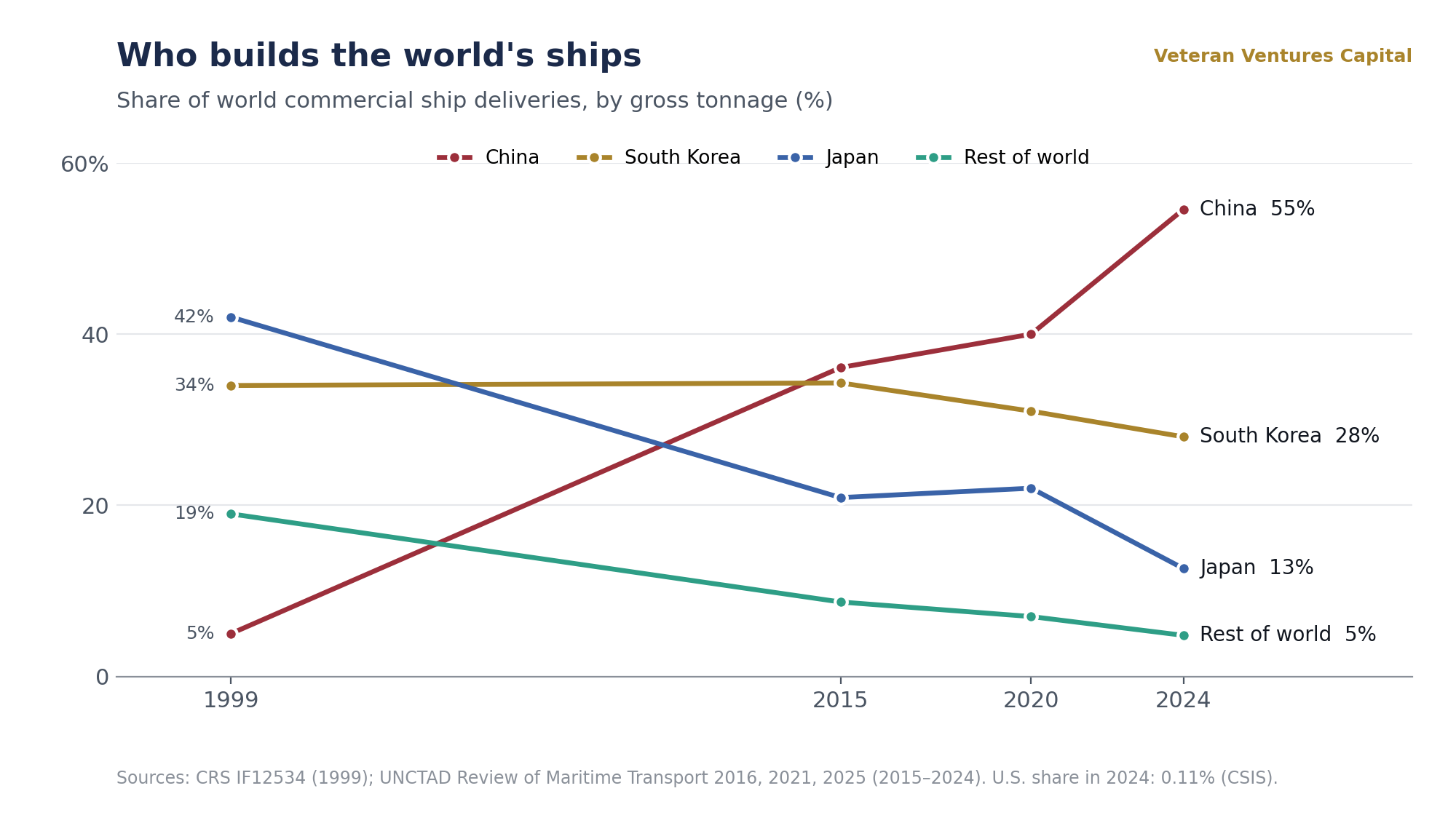
Figure 1. Share of world commercial ship deliveries by gross tonnage. Sources: CRS; UNCTAD Review of Maritime Transport.
The demand side is not the problem. Owners placed $204 billion of new orders in 2024, the largest intake in seventeen years, and the global orderbook stood at $511.6 billion by mid-2025. The supply side is the problem. The number of active large yards worldwide fell from 321 in 2009 to 131.
The United States built roughly five percent of world tonnage in the 1970s. Today it builds about five ships a year and 0.11 percent of world output; the Office of Naval Intelligence puts China's capacity at 232 times ours.
The naval side rhymes. The People's Liberation Army Navy is now the largest in the world at more than 370 battle force ships, headed for 435 by 2030. The U.S. Navy has 293. Congress has responded with money. The FY2027 request of $65.8 billion for shipbuilding is the highest since 1962. But the Government Accountability Office notes the Navy has no more ships today than it did in 2003, despite nearly doubling its real shipbuilding budget over that period, and that a Navy ship takes 80 to 180 months from design to delivery where a commercial yard takes 20 to 40. Allies are moving: Korea's $150 billion U.S. shipbuilding fund begins with a plan to take Philadelphia from two ships a year to twenty. Demand is now funded on a scale not seen in sixty years. However the bottleneck isn’t the budget; the bottleneck is capacity.
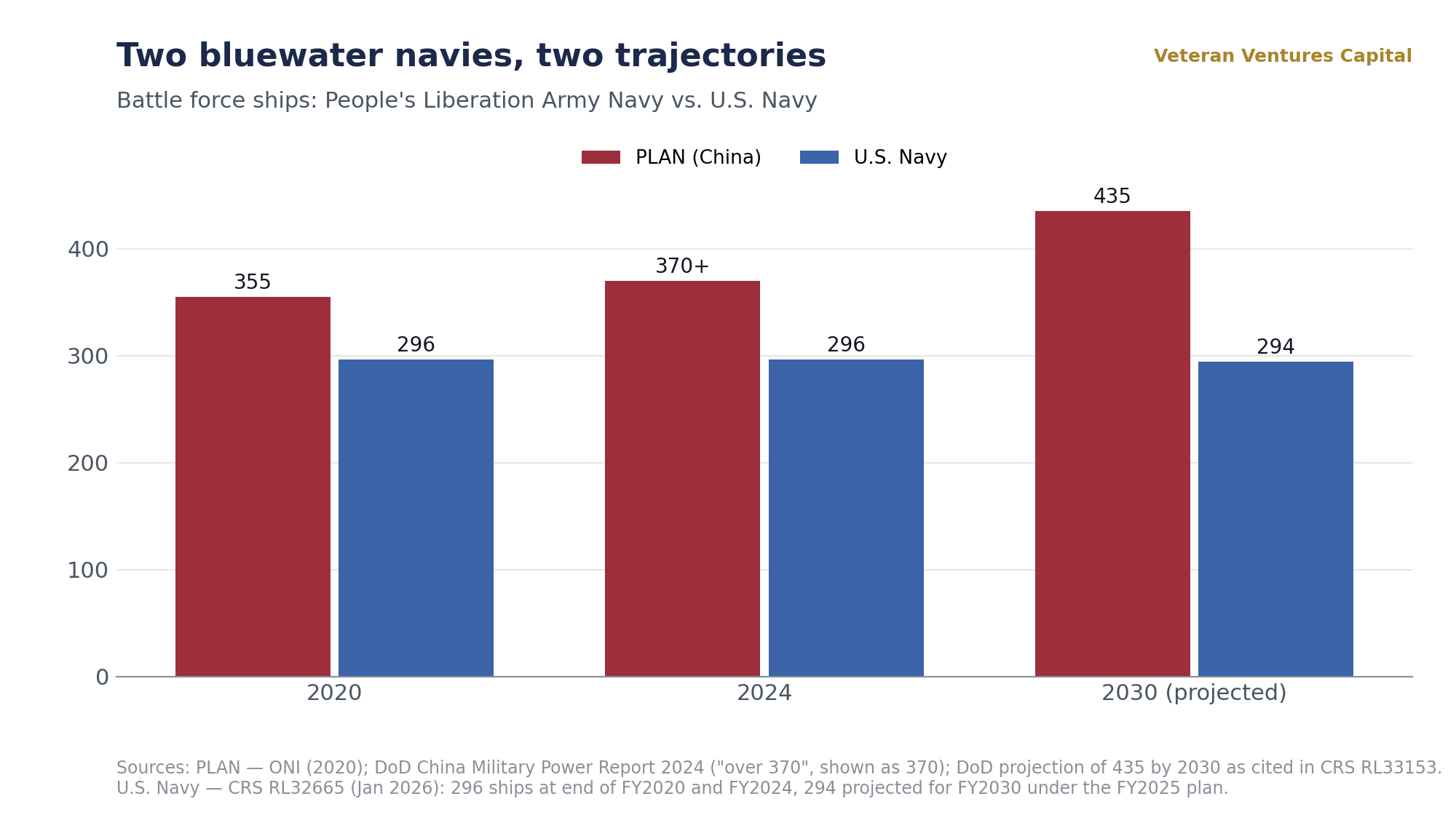
Figure 2. Battle force ships, PLAN vs. U.S. Navy. Sources: ONI; DoD China Military Power Report 2024; CRS RL33153 and RL32665.
Global MRO
Building new ships is only half the challenge—maintaining the existing fleet is also a problem. The world's current fleet is old. UNCTAD counts about 112,500 commercial vessels over 100 gross tons, with an average age of 22.2 years, more than three years older than a decade ago. Repair demand is large and growing, and it too has migrated east: the single port of Zhoushan now claims more than a fifth of the world's ship repair business, and five of the world's ten largest repair yards are Chinese.
For navies, the numbers are starker. About a third of the U.S. attack submarine fleet is in depot maintenance or idle waiting for it, against a Navy goal of one fifth. GAO reported in August that maintenance delays cost the submarine force more than 15,000 operational days over the last decade, and $3.4 billion to keep crews and boats waiting. The Congressional Budget Office found destroyer availabilities running 26 percent longer than scheduled; a DDG-51 will now spend nine years of its life in maintenance instead of four. Allies share the ailment: the Royal Navy opened 2026 with seven frigates, and Australia's auditor found a A$2.7 billion sustainment shortfall across its navy.
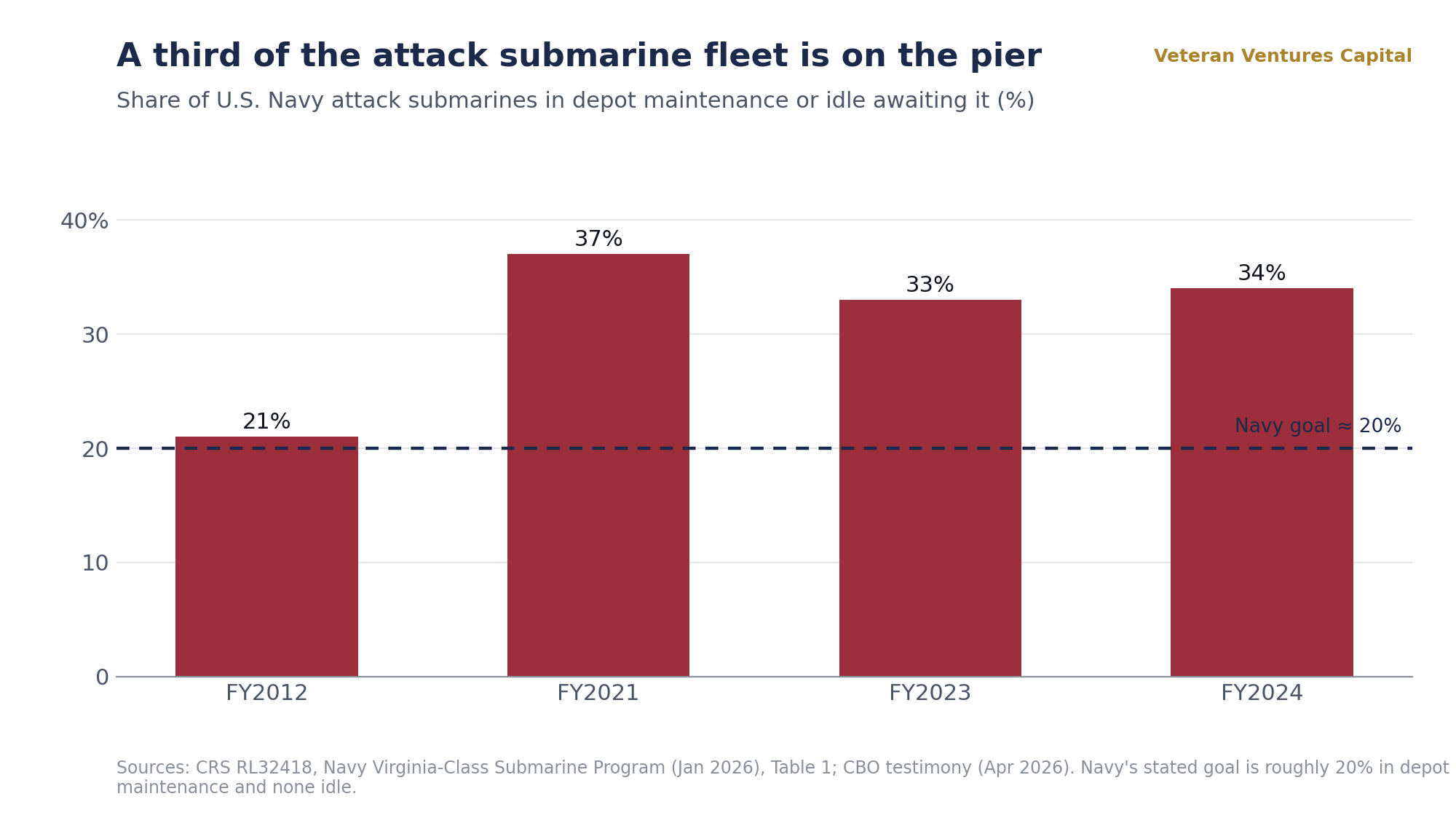
Figure 3. Share of U.S. attack submarines in depot maintenance or idle. Source: CRS RL32418 (Jan 2026), Table 1.
The instinctive diagnosis is drydocks. The Navy's four public shipyards, down from eight before the base closures of the 1990s, operate docks with an average age near 89 years. But GAO found something more interesting in the private yards that do surface-ship repair: docks in Norfolk were in use 53 to 85 percent of the time, and in San Diego about 70 to 75 percent. The constraint is not the dock, but rather spare parts. Roughly 70 percent of critical submarine suppliers are sole-source; the country had more than 2,000 casting and forging businesses at the 600-ship peak of the 1980s. Ships sit because a bracket or a casting is a year away. When the Navy printed a hangar-door bracket for USS Halsey, a part that had been quoted at eight months, it was built and certified in 21 days. The Chief of Naval Operations says additive parts have already eliminated more than 1,400 cumulative days of delay. The sustainment backlog is, to a surprising degree, a parts problem, and parts problems are solvable by method.
The Global Workforce
Every ship, new or old, is built and fixed by hand, and the hands are scarce everywhere. American ship and boat building employs 149,500 people, down from 198,700 in 1980 and 1.72 million at the peak of December 1943. Against that base, the Secretary of the Navy says the industry must hire 250,000 more workers this decade; GAO puts the figure at 174,000; the submarine industrial base alone says 140,000. None is small, and a quarter of today's workforce is retirement-eligible within five years. The Navy's acquisition chief told the Senate that first-year attrition at the yards runs 50 to 60 percent, and GAO notes it takes three to five years to make a proficient tradesperson. The American Welding Society projects the country needs 320,500 new welders by 2029.
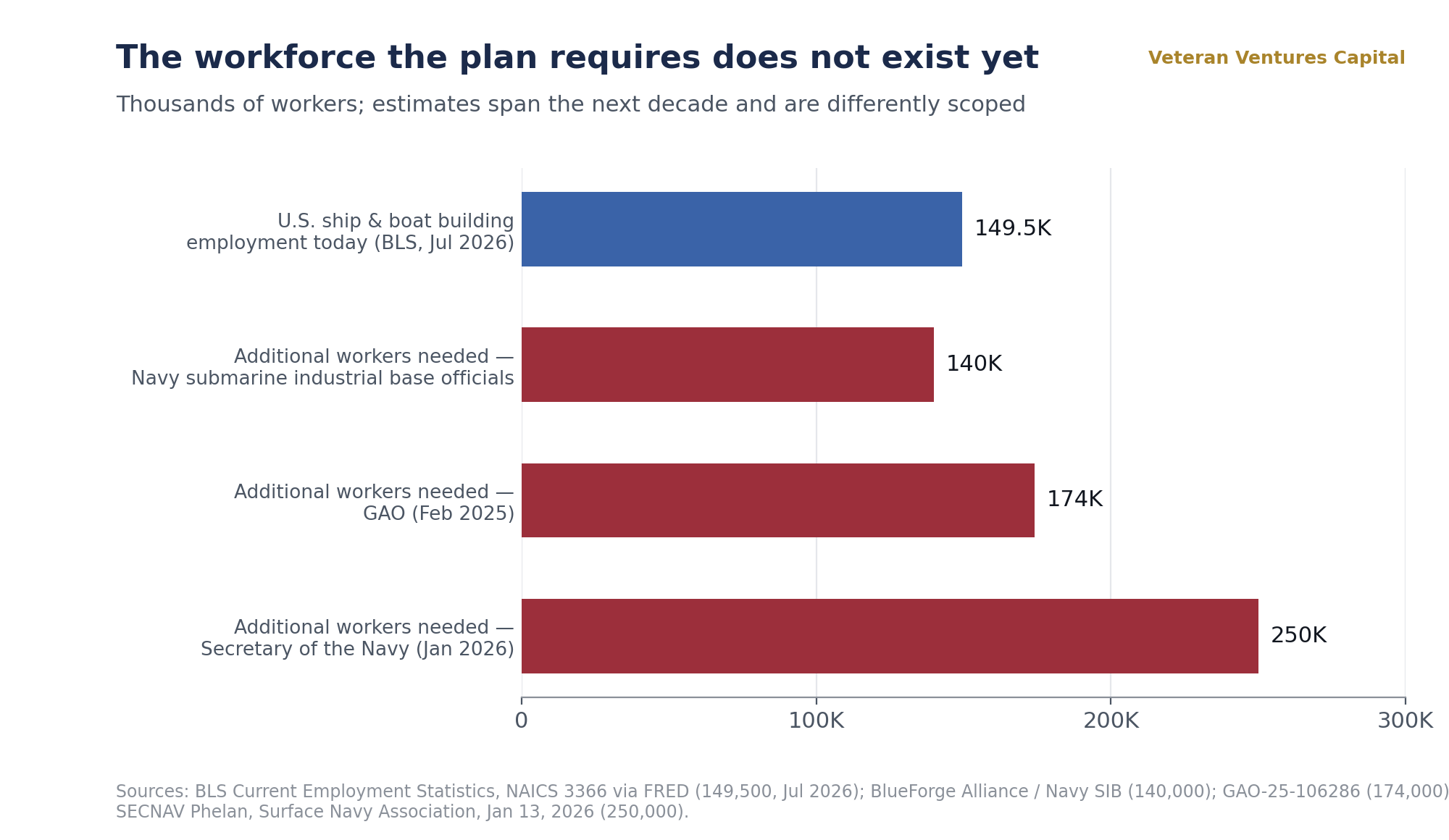
Figure 4. U.S. ship and boat building employment vs. published estimates of additional workers needed. Sources: BLS via FRED; BlueForge Alliance; GAO-25-106286; SECNAV (Jan 2026).
This is not an American peculiarity. Foreign workers were 3.2 percent of Korea's shipyard labor in 2007 and 22.7 percent in 2024; Japan's yards are about 20 percent foreign and Japanese headcount is still falling. The ships themselves are short of crews: BIMCO's 2026 report counts a shortage of 39,100 officers in the world merchant fleet and a need for 113,735 more by 2030; the U.S. Navy carries more than 20,000 unfilled billets at sea.
Kaiser faced worse. His Richmond yards had 79,000 workers by 1943, and nearly one in five of the welders was a woman who had never held a torch a year earlier. He trained them in weeks because he had redesigned the job around what a novice could do well. That’s a lesson worth noting today.
Where the Leverage Is
Demand is funded. Docks are available. What is missing is throughput: turning steel into finished parts, and parts into ships, faster than the trades can be trained. The 2025 reconciliation law recognized this and appropriated by name: $450 million for additive manufacturing, wire production, and machining; $1.1 billion for castings and forgings; $500 million for advanced manufacturing across the maritime industrial base. That is method-substitution money, aimed squarely at the parts that keep ships on the pier.
Wire-arc additive manufacturing sits at the center of it. It uses welding wire, a welding arc, and a robot to build a casting-class part in days rather than months, with a workforce that can be trained the way Kaiser trained his. The gate is not printing; it is certification, and the Navy is now working through that queue. We have been spending our time in the shipyards of Hampton Roads, and that work led to VVC Fund II’s investment in Radian Forge, a Portsmouth-based company applying large-format Wire Arc Additive Manufacturing (WAAM) to naval, maritime, and defense production. Read our investment announcement. The setting is clear: the world needs more ships and better-kept ships than its skilled trades can deliver, and the last time America faced that problem, it solved it in forty-two days.
Image: Historic photo of three large ships under construction in Richmond Shipyard. National Park Service, RORI 2348. Source.
Share this article
Know someone who would find this valuable? Share it on LinkedIn.
Get updates like this in your inbox.
Subscribe to our newsletter — insights on defense tech, portfolio companies, and what we're watching.

Restoring speed, scale, and resilience to U.S. defense manufacturing.